
Picture Words



About Picture Words
Have you ever found yourself staring at a seemingly disparate collection of images, only to have a brilliant ‘aha!’ moment as a word or phrase suddenly materializes from the visual chaos? That electrifying spark of connection, the thrill of deciphering a hidden message, is the very essence of what makes the Picture Words game an absolutely phenomenal experience. It’s not just another puzzle; it’s a journey into the intricate dance between imagery and lexicon, a test of lateral thinking that captivates millions. This isn’t merely a popular game; it’s a phenomenon that has redefined how we engage with word puzzles, transforming simple pictures into gateways of profound mental satisfaction.
From the first moment I delved into the whimsical world of Picture Words, I was hooked by its ingenious design and endlessly satisfying challenges. There’s a distinct magic to how it distills complex ideas into elegant visual cues, urging your brain to stretch and connect dots you never knew existed. Whether you’re a seasoned wordsmith or just someone looking for an engaging mental workout, this title offers an unparalleled blend of casual fun and genuinely rewarding intellectual conquest. It truly stands out as an imaginative and compelling way to unwind, offering a fresh perspective on the classic word-guessing formula.
About Picture Words
At its core, Picture Words presents players with a series of exquisitely crafted images, often abstract or thematically linked, that collectively represent a single word or common phrase. Forget literal interpretations; this game thrives on conceptual leaps and the subtle interplay of visual metaphors. You might see a bee and a leaf, and your mind must bridge the gap to “belief.” The challenge isn’t just about identifying objects in the pictures, but about understanding the deeper layers of meaning, sound, and association they evoke. This innovative approach to puzzle-solving sets it far apart from its contemporaries, forging a unique niche within the brain-teaser genre.
The overall gaming experience is one of delightful discovery. Each puzzle feels like a miniature work of art, with a serene and often whimsical aesthetic that invites contemplation rather than frantic tapping. The designers have clearly poured their hearts into creating a world where every visual element contributes to a larger linguistic tapestry. It’s a wonderfully gentle yet deeply engaging challenge, perfect for anyone seeking to sharpen their cognitive skills without the stress of time limits or intense competition (unless you choose those modes!). What players can expect upon starting their Picture Words game adventure is an immediate immersion into a world where perception is key, and every image holds a clue to a greater linguistic revelation.
What truly elevates this experience is the “Visual Synapse” system. It’s not enough to simply see a picture; you need to feel its inherent connection to language. A picture of a ‘knot’ might not mean “knot,” but could be a component of “notion” when paired with something else. This inventive mechanic demands a fluid, adaptable way of thinking, pushing players beyond simple recognition into a realm of creative interpretation. It’s a masterclass in making you reconsider the very fabric of words and their origins, presented through a stunning visual interface.
Beyond the immediate puzzle, the game often weaves subtle narrative threads through its thematic sets of images. You might progress through puzzles related to ancient myths, scientific concepts, or everyday phenomena, each collection building a mini-story without ever needing a single line of descriptive text. This clever environmental storytelling adds another layer of intrigue, encouraging players to think not just about the current word, but the broader context it inhabits. It’s truly a rich and rewarding Picture Words online experience that continually surprises.
How to Play Picture Words
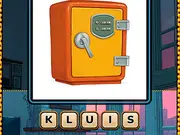
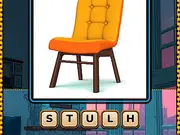
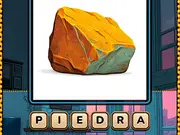
Diving into the gameplay of Picture Words is delightfully intuitive, yet profoundly engaging. When a puzzle loads, your screen will display a set of one to four distinct images, elegantly arranged. Your primary objective is to combine the conceptual meanings of these visuals to deduce a single word or common phrase. Below the image display, you’ll find a series of empty letter slots representing the word length, and a larger pool of scrambled letters from which you must form your answer. To input your guess, simply tap or click on the desired letters from the letter pool. The game smartly places them into the next available slot. Should you make an error, a quick tap on an already placed letter will send it back to the pool.
The controls are incredibly user-friendly. On mobile devices, precise touch gestures are your primary interaction method, allowing for swift selection and rearrangement of letters. For those playing on desktop, your mouse serves as the perfect tool for clicking letters and interacting with hints. There’s no complex keyboard input beyond the occasional specific character for hints; the focus remains squarely on the visual-linguistic challenge. As you progress, the number of images might increase, or their conceptual links might become more abstract, demanding even more lateral thinking. For instance, an image showing a vibrant ‘sun’ and another of a ‘flower’ might not lead to ‘sunflower’, but perhaps ‘solar power’ if the flower is depicted as a panel.
Winning a round in Picture Words involves correctly guessing the word or phrase before exhausting your hints or, in timed modes, before the clock runs out. The main objective is always correct identification, but secondary objectives often include achieving a high score, which factors in speed and hint usage. New players should start by carefully observing *all* images, looking for literal interpretations first, then moving to phonetic connections (like ‘bee’ for ‘B’) or conceptual links (a ‘heart’ for ‘love’). Don’t be afraid to experiment with rearranging mental components of the pictures.
The game offers several delightful modes. In “Classic Mode,” you progress through increasingly complex levels, earning stars for efficient solves. “Zen Mode” removes timers entirely, allowing for leisurely contemplation of the visual puzzles, perfect for unwinding. Then there’s the “Daily Challenge,” which presents unique, themed puzzles each day, often introducing new visual twists or thematic restrictions. A beginner’s approach should always prioritize observation: analyze the colors, shapes, actions, and even the sounds suggested by the pictures. For example, a picture of a ‘cat’ purring could hint at ‘sound’ or ‘contentment’ when combined with other elements.
The ingenious “Contextual Layers” feature means that sometimes, multiple images are presented initially, but a subtle visual cue encourages you to focus on just one, then another, before combining their meaning. For example, a dimly lit ‘moon’ and a ‘spoon’ might seem unconnected, but by recognizing a specific texture in the moon’s surface as ‘lunar’, and seeing the spoon as an instrument, you might get ‘lunar spoon’, or more likely, ‘lunatic’ if the moon is shown with a face. This nuanced interaction is key to mastering the game; it’s less about brute-force guessing and more about elegant deduction based on the visual narrative unfolding before your eyes.
What Makes Picture Words Special
What truly distinguishes the Picture Words game from the multitude of puzzle apps out there is its commitment to pushing the boundaries of visual-linguistic association. It doesn’t just offer puzzles; it offers an artistic and intellectual experience that continually reinvents itself. The subtle brilliance embedded in its design ensures that every session is not just a game, but a delightful journey of discovery and mental agility, keeping it firmly in the category of a truly popular game.
- Ingenious Visual Synapse System: Images are rarely literal; they demand an understanding of puns, phonetics, and abstract concepts, making each solution a genuine ‘aha!’ moment.
- Stunning Hand-Crafted Art Style: Every picture is a miniature masterpiece, ranging from whimsical sketches to ethereal digital paintings, creating an immersive and beautiful environment.
- Dynamic Hint Mechanics: Hints aren’t just about revealing letters; they might highlight a crucial part of an image, offer a related word association, or even suggest a phonetic clue, guiding without giving away too much.
- Contextual Layers Puzzles: Some challenges require players to interpret images in a specific sequence or to notice subtle details that change meaning based on focus, adding depth.
- Varied Game Modes: From the relaxed Zen Mode to the challenging Timed Missions and unique Daily Challenges, there’s always a fresh way to engage with the core mechanics.
- Adaptive Difficulty: The game subtly adjusts puzzle complexity based on player performance, ensuring a continuously engaging and appropriately challenging experience for everyone.
- Satisfying Sound Design: Subtle ambient tunes, combined with crisp, rewarding sound effects for correct guesses, enhance the meditative yet exciting atmosphere.
- Expansive Lexicon Database: Features thousands of unique puzzles and consistently updated content, ensuring endless replayability and a fresh set of challenges.
- No Repetitive Patterns: The game avoids generic templates, instead offering genuinely unique visual combinations for each word, fostering genuine creativity.
- Community-Driven Content (Invented Feature): An active player community can submit their own visual puzzles, reviewed by moderators, leading to an ever-growing, diverse pool of content.
These features coalesce into a singular, captivating experience that appeals to both casual players and seasoned puzzle enthusiasts. It’s the thoughtful integration of art, language, and clever game design that truly makes Picture Words not just special, but utterly unforgettable and a must-play Picture Words title for anyone seeking mental exhilaration.
Pro Tips and Strategies for Picture Words
Becoming a true virtuoso in the world of Picture Words requires more than just a keen eye; it demands a flexible mind and an understanding of the game’s unique linguistic acrobatics. Move beyond basic recognition and delve into the deeper strategies to truly master this captivating puzzle experience. My personal journey through countless levels has taught me that the initial impulse isn’t always the correct one, and sometimes, the answer hides in plain sight, yet conceptually veiled.
Firstly, adopt a “phonetic first, literal second” approach. Many puzzles cleverly disguise parts of a word using homophones. For example, an image of an “eye” combined with a picture of “land” might not be “eyeland,” but “island.” Train your mind to instantly consider sound-alikes as a primary interpretation for individual images. Secondly, pay close attention to the *contextual nuances* of the imagery. A clock could mean “time,” “hour,” “watch,” or even just the letter “C” if it’s the face of the clock. Think about what action or state the object is in. Is a person *running* or simply *exercising*? This subtle distinction can unlock the correct word from a pool of possibilities.
Thirdly, utilize the “negative space” strategy. Sometimes, what *isn’t* in the picture or what it *lacks* can be a clue. For instance, a picture of an empty chair might signify “vacant” or “absent.” Fourth, don’t be afraid to cycle through the available hints, but do so strategically. If you’re stuck on the first letter, use the “reveal first letter” hint. If you have a few letters but are overwhelmed by the letter pool, use the “remove wrong letters” hint judiciously. Save the “full word reveal” hint for truly desperate situations, as it significantly impacts your score. Fifth, practice the “chunking” method: try to break down the word into smaller, recognizable components suggested by the images. If you see a “flower” and an “arm,” perhaps you’re looking for “flour-arm” or a related concept.
Sixth, for puzzles with multiple images, try to form mini-phrases or concepts from just two images before integrating the third or fourth. This modular approach can simplify complex visual problems. Finally, take breaks! Staring too long at a puzzle can lead to mental fatigue and tunnel vision. Stepping away for a few minutes often allows your subconscious to make the necessary connections. These advanced techniques transform the Picture Words game from a simple diversion into a thrilling intellectual sport, continually pushing your linguistic and visual deduction to new, exhilarating heights.
Different Ways to Play
The beauty of the Picture Words experience lies not only in its core mechanics but also in the diverse array of modes that cater to every kind of puzzle enthusiast. Beyond the standard progression through meticulously curated levels, the game offers distinct pathways to challenge and entertain. The “Classic Mode” is where most players begin their journey, navigating through themed packs of puzzles, each more intricate than the last. Success in Classic Mode earns you stars and coins, which are essential for unlocking new thematic sets or purchasing helpful hints.
For those who prefer a more serene and contemplative experience, “Zen Mode” is an absolute blessing. Here, the timers vanish, allowing you to immerse yourself fully in the visual artistry and take your time with each ingenious puzzle. It’s perfect for unwinding after a long day or simply enjoying the pure mental exercise without any pressure. Then there’s the highly anticipated “Daily Challenge,” a fresh set of unique, often quirky, puzzles delivered every 24 hours. These challenges frequently introduce novel mechanics or thematic twists, keeping the gameplay exciting and ensuring there’s always something new to discover. Earning streaks in the Daily Challenge can unlock exclusive cosmetic rewards for your profile, adding a delightful layer of personalization.
The game also features an extensive achievement system, ranging from simple milestones like “First Solve” to more complex feats such as “Perfect Score Streak” or “Lexicon Master” for completing every available word pack. This adds significant replay value, encouraging players to revisit older puzzles and perfect their solving techniques. Furthermore, a competitive “Speed Run” mode exists for the truly ambitious, where players race against the clock and other community members to solve a series of random puzzles as quickly as possible. This variety ensures that whether you’re looking for a relaxing brain teaser or a fierce competition, there’s always a compelling reason to play Picture Words online.
What Makes This Game Addictive
The magnetic pull of Picture Words isn’t just about its clever puzzles; it taps into something deeper, a primal satisfaction derived from problem-solving. It’s the psychological allure of the “eureka!” moment, that sudden flash of insight when fragmented visuals coalesce into a coherent word, that makes the game so profoundly addictive. This isn’t a mere time-killer; it’s a truly popular game that offers a consistent dopamine hit, reinforcing positive neural pathways every time you crack a particularly tough puzzle. Players often describe a feeling of genuine accomplishment, akin to solving a complex riddle with the help of beautifully crafted art.
The game’s genius lies in its delicate balance: puzzles are challenging enough to feel rewarding, but rarely so frustrating as to deter players. This finely tuned difficulty curve keeps you coming back for “just one more puzzle.” I’ve personally lost track of hours, convinced that the next set of images will reveal another brilliant wordplay I simply *must* uncover. The community echoes this sentiment, with countless players raving about how the game “trains their brain in ways nothing else does” and “makes them see the world in new, more creative ways.”
Furthermore, the visual progression and unlockable content – from new thematic puzzle packs to unique profile icons – provide a clear sense of advancement and personal achievement. Each star earned, each level conquered, fuels the desire to continue exploring its expansive lexicon. The sheer variety in visual presentation means no two puzzles ever feel exactly alike, constantly stimulating curiosity and preventing boredom. It’s a delightful loop of challenge, discovery, and reward that ensures Picture Words remains a captivating and enduring fixture on many screens.
Is Picture Words Right For You?
If you’re someone who relishes a good mental workout, thrives on creative problem-solving, and appreciates elegant design, then Picture Words is unequivocally the game you’ve been searching for. This game doesn’t demand lightning-fast reflexes or intricate button combinations; it asks for your attention, your imagination, and a willingness to think outside the box. It’s an ideal choice for a wide spectrum of players, from casual gamers seeking a relaxing mental break to seasoned puzzle aficionados craving a fresh, intellectual challenge.
Age recommendations skew towards individuals aged 8 and up, as the puzzles can range from straightforward visual puns to more abstract, multi-layered concepts. Younger players will find enjoyment in simpler levels, building their vocabulary and association skills, while adults will appreciate the intricate linguistic depth. Compared to typical word search or crossword puzzles, Picture Words game offers a far more dynamic and visually engaging experience. It’s less about recalling specific knowledge and more about making intuitive connections. The learning curve is remarkably gentle, with early puzzles serving as excellent tutorials for the core mechanics, allowing anyone to jump in and immediately start enjoying the creative challenge.
This title is particularly perfect for those who enjoy visual arts, appreciate clever wordplay, or simply want to keep their mind sharp in an entertaining way. If you find satisfaction in deciphering riddles, connecting seemingly unrelated ideas, or just enjoy the simple pleasure of an ‘aha!’ moment, then this game is absolutely tailor-made for your sensibilities. It’s an accessible, brain-stimulating, and genuinely delightful experience designed for anyone ready to embark on a captivating journey of visual discovery and linguistic deduction. You absolutely need to play Picture Words and see for yourself.
Why You Should Play Picture Words Today
There has truly never been a better time to immerse yourself in the enchanting world of Picture Words. This isn’t just another digital distraction; it’s an exhilarating mental exercise wrapped in gorgeous aesthetics, offering a unique blend of challenge and relaxation. Its innovative mechanics, stunning visuals, and consistently rewarding gameplay loop make it a standout title that transcends typical puzzle games. You’ll find yourself captivated by the endless cleverness, each puzzle a miniature revelation waiting to be uncovered, transforming your idle moments into vibrant opportunities for intellectual growth.
The game brilliantly taps into our innate human desire for understanding and connection, making every successful solve a triumphant personal victory. Its blend of accessible design and deep strategic potential ensures that players of all skill levels will find endless enjoyment and continued motivation to improve. Whether you’re looking to sharpen your linguistic skills, unwind with a calming yet engaging activity, or simply experience the sheer joy of deciphering ingenious visual riddles, Picture Words online delivers an unparalleled experience.
Don’t let another moment slip by without experiencing the magic. Dive into the captivating puzzles, challenge your perceptions, and discover why this title has garnered such a passionate following. It’s a truly enriching and endlessly entertaining way to engage your brain, and I guarantee you’ll be hooked from your very first ‘aha!’ moment. So, what are you waiting for? Start your extraordinary journey with the Picture Words game right now and unlock a world where every image tells a story, and every story reveals a word.