
Stand on the Right Color Robby


About Stand on the Right Color Robby
In a digital landscape saturated with fleeting fads and repackaged concepts, occasionally a title emerges that carves out its own niche, offering an experience both immediately understandable and deceptively profound. Such is the captivating allure of Stand on the Right Color Robby, a game that initially appears simple, yet quickly reveals layers of strategic depth and pulse-pounding challenge. It’s not just another quick-play diversion; it’s a meticulously crafted exercise in perception, reaction, and foresight that has quickly garnered a fervent following among gamers seeking genuine engagement. From its vibrant aesthetic to its relentless difficulty curve, this remarkable title has a magnetic pull, transforming casual curiosity into an addictive quest for mastery. Players aren’t just passing time; they’re sharpening their minds, pushing their limits, and discovering why this particular color-matching challenge has become a truly popular game in a sea of contenders.
The beauty of Stand on the Right Color Robby lies in its elegant distillation of complex ideas into an accessible format. It bypasses convoluted tutorials and lengthy narratives, diving straight into the core loop of intense, reactive gameplay. This isn’t just about matching hues; it’s about making split-second decisions under pressure, navigating a dynamically shifting environment, and constantly adapting to escalating demands. The intrinsic satisfaction derived from perfectly executed moves and overcoming seemingly impossible odds is what cements its status as a standout experience. It’s a testament to ingenious game design that something so straightforward can evoke such a powerful sense of accomplishment, drawing players back repeatedly to test their reflexes and strategic acumen in an ever-evolving digital arena.
About Stand on the Right Color Robby
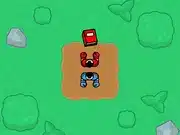
At its core, Stand on the Right Color Robby game plunges players into a vibrant, grid-based arena, typically comprising a patchwork of brightly colored tiles. The protagonist, a charming and nimble character named Robby, starts each round positioned somewhere within this kaleidoscopic landscape. The fundamental objective is disarmingly simple: when a target color flashes or is explicitly indicated on the screen, players must maneuver Robby onto *any* available tile matching that specific hue before a rapidly dwindling timer expires. Fail to do so, or step onto an incorrect color when the stakes are high, and the round concludes, challenging you to restart and refine your precision.
What elevates Stand on the Right Color Robby far beyond a mere reaction test is the ingenious layering of complexity as the game progresses. Initially, the grid might be small, featuring only a handful of distinct colors and a generous timer. However, rounds quickly escalate. The grid expands, presenting a larger field of choices and potential missteps. The palette of colors broadens, introducing shades that are increasingly similar, demanding sharper visual discrimination. Crucially, the timer becomes increasingly unforgiving, compressing decision-making windows to mere fractions of a second. This escalating pressure transforms each playthrough into a thrilling dance between rapid identification and agile execution, pushing cognitive limits with every decision.
The game’s setting, while minimalist, is profoundly effective. The clean lines and clear distinctions between colors ensure that visual information is always paramount, yet the dynamic nature of the tiles—sometimes shifting, sometimes disappearing—adds a layer of unpredictable chaos. There’s no grand narrative or elaborate backstory for Robby; his purpose is singularly focused on surviving the chromatic gauntlet. This stripped-down approach allows the pure mechanics of the game to shine, fostering an environment where player skill and mental acuity are the sole determinants of success. It’s a refreshing departure from story-heavy titles, offering a direct, unadulterated challenge.
Players venturing into the world of Stand on the Right Color Robby can expect an immediate immersion into a cycle of intense focus, quick learning, and satisfying improvement. Every successful stand feels like a small victory, a testament to quick thinking and precise control. Conversely, every misstep offers an immediate lesson, prompting analysis of what went wrong and how to react better next time. The overall gaming experience is one of sustained exhilaration, punctuated by moments of intense concentration and the gratifying rush of beating your previous high score. It’s a unique blend of puzzle-solving, reflex training, and strategic positioning, all wrapped in an engaging, visually distinct package.
How to Play Stand on the Right Color Robby
To truly excel and experience the full depth of this captivating title, understanding the specific mechanics of how to play Stand on the Right Color Robby is paramount. When you launch the game, you’ll be presented with a square grid, typically 5×5 or 7×7, filled with a diverse array of colored tiles. Your character, Robby, a small, identifiable avatar, will spawn at a random central point. At the top of the screen, or perhaps highlighted directly on the grid’s border, you’ll see the current target color for the round – for instance, a vibrant green square or the word “BLUE” clearly displayed.
Your primary control method for Robby is typically through directional inputs. On a keyboard, you’ll use the Arrow Keys (Up, Down, Left, Right) or the familiar WASD cluster (W for Up, A for Left, S for Down, D for Right) to move Robby one tile at a time in the corresponding direction. The objective is to swiftly guide Robby to *any* tile on the grid that matches the currently indicated target color. Once Robby successfully lands on a correct tile, that round is completed, points are awarded, and a new target color appears, often with a slightly shorter timer for the subsequent round.
The core challenge stems from the ever-present countdown timer, usually displayed prominently at the top or bottom of the screen. This timer begins to tick down the moment a new target color is revealed. If Robby fails to reach a correct tile before the timer hits zero, the game ends. As you progress, the game introduces more intricate dynamics. Later stages might feature “penalty” tiles that, if stepped on, briefly stun Robby or deduct crucial seconds from your timer. Some grids even have “disappearing” tiles that vanish after a short period, forcing you to plan your route not just by color, but also by the stability of the path. A crucial beginner tip is to start by focusing on identifying the target color and then immediately scanning for the *closest* safe tile of that color. Don’t overthink; trust your initial visual processing.
While the classic survival mode forms the backbone of the experience, some versions of Stand on the Right Color Robby online introduce variations. For instance, a “Sprint Mode” might task you with standing on 20 correct colors as fast as possible, emphasizing pure speed over long-term survival. Another variant, “Pattern Mode,” could challenge you to complete sequences of color stands (e.g., Red then Blue then Green) before the timer runs out. Regardless of the mode, the foundational strategy remains: perceive, plan, and execute. Practice quick, decisive movements using your chosen directional keys, developing muscle memory for efficient grid navigation. Always keep one eye on the target color and the other on Robby’s immediate surroundings, anticipating the shortest viable path.
What Makes Stand on the Right Color Robby Special
What truly sets Stand on the Right Color Robby apart in the crowded digital gaming sphere is its ingenious blend of accessible mechanics and escalating, demanding gameplay. It’s a masterclass in how to create an incredibly engaging experience from a seemingly straightforward concept, hooking players with its immediacy and retaining them through its surprising depth. This title doesn’t just ask you to react; it subtly trains your brain in pattern recognition, spatial reasoning, and rapid decision-making, offering a constant, thrilling mental workout that feels more like play than exercise.
- Dynamically Shifting Grids: Each new round presents a fresh arrangement of colors, ensuring no two playthroughs ever feel identical and demanding constant adaptation.
- Intuitive Yet Deep Controls: Simple directional inputs (arrow keys/WASD) are easy to learn, but mastering Robby’s precise movement under pressure requires significant skill development.
- Progressive Difficulty Curve: The game masterfully introduces challenge, gradually increasing grid size, color complexity, and timer urgency, keeping players consistently engaged without feeling overwhelmed too quickly.
- Crisp Visual Clarity: Despite the rapid pace and often chaotic color changes, the target color is always presented with unambiguous clarity, preventing frustrating misreads.
- Responsive Movement Feedback: Robby’s movements feel immediate and fluid, directly translating player input into on-screen action, which is crucial for precision in a high-stakes environment.
- Adrenaline-Pumping Timers: The relentless countdown creates an exhilarating sense of urgency, transforming each decision into a high-pressure gamble.
- Strategic Tile Hazards: Later stages introduce tiles that disappear, move, or inflict minor penalties, adding layers of tactical consideration beyond simple color matching.
- Robust High Score System: A compelling leaderboard or personal best tracking ignites a powerful competitive drive, encouraging endless attempts at improvement.
- Charming, Clean Aesthetic: The minimalist design ensures focus remains on gameplay, while vibrant colors and smooth animations provide a pleasant visual experience.
- Addictive “Just One More Try” Loop: The quick rounds and immediate feedback create an irresistible urge to continuously refine strategies and push for a higher score.
- Subtle Sound Design Cues: Audio feedback for correct stands, timer warnings, and game-over signals enhances immersion and aids in rapid assessment.
- Varied Thematic Palettes: Unlockable color schemes or visual styles for the grid and Robby allow for personalization, adding an extra incentive to progress.
Ultimately, these carefully interwoven features coalesce to create an experience that is far greater than the sum of its parts. They transform what could have been a fleeting novelty into a deep, rewarding challenge that consistently offers moments of intense satisfaction. It’s the kind of game that resonates because it respects the player’s intelligence and reflexes, offering a pure, unadulterated test of skill wrapped in an undeniably entertaining package.
Mastering Stand on the Right Color Robby
While the basic premise of Stand on the Right Color Robby game is straightforward, truly mastering its intricacies requires a nuanced approach and dedicated practice. Moving beyond simply reacting to the target color demands a strategic mindset, keen observational skills, and the development of refined muscle memory. For those aspiring to conquer the leaderboards and consistently achieve impressive scores, here are some actionable strategies to elevate your gameplay from novice to expert.
Firstly, cultivate exceptional peripheral vision and anticipatory scanning. Don’t just tunnel vision on the central Robby and the target color. Train your eyes to quickly sweep the entire grid for instances of the required color as soon as it appears. More advanced players even begin to *anticipate* likely future colors by observing patterns in previous rounds or recognizing sections of the grid with high concentrations of certain hues. Secondly, optimize your starting position for efficiency. After making a successful stand, try to position Robby on a tile that offers multiple viable paths to various colors. Avoid ending a round in a corner if possible, as it limits your immediate movement options for the next color reveal. Developing this “safe zone” awareness can shave crucial milliseconds off your travel time.
Another crucial technique is precise movement economy. Every extraneous key press wastes precious time. Practice moving Robby in direct lines, minimizing diagonal or unnecessary lateral shifts. This ties into “route planning on the fly” – as soon as the target color appears, mentally map out the shortest, safest path, accounting for any potential disappearing tiles or hazards. Don’t hesitate, but don’t rush blindly either; a moment of calculated pause to choose the optimal route is often better than frantic, inefficient movement. Finally, consider the rhythmic flow of the game. While it’s a reaction game, experienced players often develop a subconscious rhythm for identifying, moving, and arriving on the tile. This can transform frantic button mashing into a fluid, almost dance-like sequence of actions, allowing for sustained high-level play. Regularly playing Stand on the Right Color Robby online against others or striving for high scores fosters this competitive drive and helps solidify these advanced techniques.
Different Ways to Play
The core survival loop of Stand on the Right Color Robby provides endless replayability, but many iterations of the game wisely expand upon this foundation with various modes and options, catering to different player preferences and skill levels. The most common alternative is often a Time Attack Mode, where instead of simply trying to survive as long as possible, players are challenged to correctly stand on as many designated colored tiles as they can within a strict, predetermined time limit, like 60 or 90 seconds. This mode shifts the focus from endurance to pure speed and precision, offering a different kind of adrenaline rush.
Another popular variation is the Challenge Mode, which presents players with specific, often intricate, objectives. These might include tasks such as “Stand on Green 10 times without touching Red,” or “Clear 3 consecutive rounds using only the tiles in the top row.” Such challenges force players to think outside the box, master specific movement patterns, and often unlock special achievements or cosmetic rewards. Some versions also feature distinct Difficulty Levels (Easy, Normal, Hard, Expert) which directly impact factors like initial grid size, number of available colors, speed of the timer’s countdown, and the frequency of hazardous tiles. This tiered approach ensures that players of all skill sets can find a comfortable entry point while still having a formidable Everest to climb in the higher echelons.
Beyond distinct game modes, Stand on the Right Color Robby game often incorporates a satisfying progression system. Achieving certain score milestones or completing specific challenges might unlock new visual themes for the grid, alternative character skins for Robby, or unique sound packs. This not only provides tangible rewards for continued engagement but also allows players to personalize their experience, adding a fresh visual appeal to their ongoing pursuit of mastery. This constant stream of unlockables, combined with the inherently competitive nature of high scores, ensures that the game’s replay value remains exceptionally high, consistently offering new incentives to keep playing.
What Makes This Game Addictive
The undeniable allure of Stand on the Right Color Robby stems from its powerful psychological hooks, masterfully designed to keep players returning for “just one more try.” The immediate, crystal-clear feedback loop is a primary driver: you either successfully stand on the right color and get a surge of accomplishment, or you miss, instantly understanding why and knowing exactly what you need to improve. This instant gratification and clear path to improvement create a potent motivational cycle, drawing you deeper into the game’s rhythm. It’s a prime example of a game that evokes the ‘flow state’ – where the challenge perfectly matches your skill, leading to intense focus and a loss of self-awareness as you become fully immersed in the chromatic dance.
Furthermore, the game’s escalating difficulty acts as a constant, tantalizing challenge. Just when you feel you’ve mastered a certain pace, the timer shortens, new colors are introduced, or the grid shifts in unexpected ways, forcing you to adapt and push your mental limits. This perfectly calibrated difficulty prevents stagnation and continuously fuels the desire to conquer the next tier of challenge. The community aspect, even if informal, also plays a significant role. Sharing high scores with friends or seeing your name climb a leaderboard in Stand on the Right Color Robby online ignites a primal competitive instinct, turning solo play into a shared quest for supremacy. As one enthusiastic player creatively observed, “I started playing to kill five minutes, and now I’m convinced it’s making my brain faster. It’s like a mental sprint where every color is a hurdle!” Another quipped, “My thumbs have never been so coordinated. It’s genuinely fun and oddly stress-relieving at the same time.”
Ultimately, the core entertainment value of Stand on the Right Color Robby isn’t just about quick reflexes; it’s about the pure, unadulterated joy of improving. Each session offers a tangible measure of progress, a clear indication that your perception is sharper, your fingers quicker, and your strategic thinking more acute. This journey of personal development, combined with the game’s vibrant aesthetics and engaging mechanics, transforms it into an incredibly addictive, endlessly rewarding experience that consistently delivers bursts of focused fun and genuine satisfaction.
Is Stand on the Right Color Robby Right For You?
If you find yourself drawn to games that demand precision, rapid decision-making, and a keen eye for detail, then Stand on the Right Color Robby is unequivocally a title you need to explore. This game shines brightest for players who relish fast-paced action and the thrill of mastering an intuitively simple yet profoundly deep mechanic. It’s ideal for fans of classic reaction challenges, puzzle enthusiasts looking for a dynamic twist, or anyone seeking a quick, intense mental workout that offers immediate feedback and tangible skill improvement. The game’s accessible learning curve means that even complete newcomers can grasp the basics within minutes, while its high skill ceiling provides endless opportunities for seasoned gamers to push their limits and chase those elusive high scores.
Age recommendations for Stand on the Right Color Robby are broad, generally appealing to players aged eight and up. Younger players can benefit from the color recognition and quick thinking it encourages, while adults will appreciate the sophisticated challenge it presents as the difficulty ramps up. It’s a fantastic choice for those quick breaks during work or study, offering a potent dose of engagement without requiring a significant time commitment or deep narrative investment. If you enjoy titles that test your spatial awareness, pattern recognition, and ability to perform under pressure – perhaps even games that blend the quick thinking of a Simon Says with the grid navigation of a light puzzle-platformer – then Robby’s colorful world will likely resonate deeply with you.
Compared to other popular game types, it holds a unique space. While it shares the “just one more go” addiction of arcade classics and the mental agility requirements of certain puzzle games, its specific blend of color identification, timed movement, and escalating environmental hazards creates an experience all its own. The initial difficulty is low enough to be inviting, but the subsequent challenges are robust enough to keep even the most competitive players hooked. Whether you’re a casual player looking for a vibrant distraction or a dedicated gamer eager to refine your reflexes and strategic prowess, play Stand on the Right Color Robby, and you’ll discover a surprisingly rewarding and endlessly entertaining challenge designed to hone your mental acuity.
Why You Should Play Stand on the Right Color Robby Today
In a world overflowing with digital distractions, finding a game that genuinely captivates, challenges, and rewards can feel like discovering a hidden treasure. Stand on the Right Color Robby is precisely that kind of gem. It’s a testament to minimalist design delivering maximum impact, offering an elegant fusion of quick thinking, strategic positioning, and razor-sharp reflexes that will undoubtedly leave you invigorated. This isn’t just about passing the time; it’s about actively engaging your mind, pushing the boundaries of your perception, and celebrating every perfectly executed move as a small triumph. The constant pursuit of a higher score, the satisfying grind towards mastery, and the sheer joy of overcoming increasingly complex chromatic puzzles create an experience that is both profoundly addictive and deeply fulfilling.
The beauty of this title lies in its universal appeal. It effortlessly transcends skill levels, offering an accessible entry point for newcomers while providing an almost limitless ceiling for those determined to achieve true mastery. The vivid graphics, responsive controls, and the ever-present, pulse-pounding timer combine to create an immersive, high-stakes environment where every second counts. It’s an instant classic that reminds us that the most profound gaming experiences often emerge from the simplest, most elegant concepts. If you’re yearning for a game that respects your intelligence, celebrates your growing skill, and provides endless opportunities for focused, exhilarating fun, then your search ends here.
Don’t just read about the hype; dive into the vibrant, challenging world of Stand on the Right Color Robby yourself. Experience the unique blend of tension and triumph that has captivated countless players and established it as a truly popular game. Whether you’re aiming to sharpen your reflexes, compete for global high scores, or simply enjoy a wonderfully crafted, engaging diversion, this title delivers on all fronts. Head over to where you can play Stand on the Right Color Robby online right now and prepare to be utterly hooked. Your brain will thank you for the exhilarating workout!