
Station Meltdown


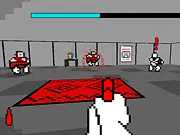





About Station Meltdown
Ever found yourself craving a gaming experience that truly tests your mettle, where every single decision holds the weight of impending catastrophe? If your answer is a resounding yes, then prepare to have your strategic senses ignited by a title that’s been subtly dominating the indie scene and captivating players worldwide: Station Meltdown. This isn’t just another game; it’s a meticulously crafted crucible of crisis management and high-stakes planning that has carved out a unique niche in the hearts of gamers who appreciate genuine depth. The sheer thrill of teetering on the brink of disaster, only to pull your facility back from the precipice through sheer wit and tactical prowess, is an unmatched adrenaline rush that keeps players utterly hooked.
What makes Station Meltdown resonate so deeply with its dedicated fanbase isn’t merely its intense pressure cooker environment, but the profound satisfaction derived from overcoming seemingly insurmountable odds. It’s a testament to brilliant design when a game can evoke such a powerful sense of responsibility and triumph. Players aren’t just clicking buttons; they’re making life-or-death calls, prioritizing repairs, managing dwindling resources, and battling against a relentless clock. This immersive engagement creates an almost personal connection to the struggling station, turning every successful stabilization into a hard-earned victory. It’s this captivating blend of challenge and reward that solidifies its status as a truly popular game.
From the moment you first launch Station Meltdown, you’re not just playing a game; you’re stepping into the boots of a desperate commander, tasked with salvaging what remains of humanity’s ambition in the cold expanse of space. The game’s ingenious mechanics encourage deep analytical thinking and quick reactions, distinguishing it from countless other titles vying for attention. It’s a strategic masterpiece that demands your full focus, promising an experience that is as intellectually stimulating as it is emotionally gripping. This intricate ballet of survival is precisely why countless enthusiasts find themselves returning to play Station Meltdown time and again, drawn by its magnetic pull and the promise of another heart-pounding challenge.
About Station Meltdown
At its core, Station Meltdown plunges players into the harrowing scenario of managing a deep-space research facility, the ‘Astraeus-7’, as it undergoes a catastrophic cascade failure. Far from Earth and surrounded by the unforgiving vacuum, your mission is starkly simple yet incredibly complex: prevent the station’s core from reaching critical meltdown and ensure the survival of its skeleton crew. This isn’t a game about epic space battles or alien invasions; it’s a relentless, internal struggle against systemic collapse, where the enemy is entropy itself. Every whirring generator, every blinking console, every life support module is a piece of a fragile ecosystem on the brink of total failure, and you are its sole orchestrator of salvation.
The game’s setting is meticulously crafted, portraying a claustrophobic yet expansive environment where danger lurks behind every failing system. You’ll navigate a beautifully rendered, multi-deck station layout, each sector a potential ticking time bomb. The narrative, though understated, is powerfully conveyed through the unfolding crisis: an experimental energy source gone rogue, environmental systems degrading, and communication arrays failing. This creates a palpable sense of isolation and urgency, emphasizing that every decision matters immensely. What makes Station Meltdown game truly unique is its focus on realistic, albeit fictionalized, engineering challenges. You’re not just fixing abstract problems; you’re dealing with specific component failures, coolant leaks, power surges, and even atmospheric purifiers choking on their own filters.
The core mechanics revolve around real-time resource allocation and damage control. You begin with a small pool of vital resources—power cells, spare parts, emergency coolant, and a handful of specialized crew members. As various systems inevitably begin to fail, represented by dynamic indicators and audible alarms, you must strategically deploy your engineers, reroute power, patch breaches, and manage the psychological state of your crew. The game ingeniously intertwines these elements, meaning a depleted power cell in Sector Gamma could lead to critical life support failure in Sector Delta, forcing players to think several steps ahead and anticipate potential domino effects.
The overall gaming experience is one of intense, sustained pressure, punctuated by moments of desperate ingenuity. There’s a constant visual and auditory feedback loop – the flickering lights, the groaning metal, the urgent alerts – that keeps players on edge. What players can expect when they start playing is a steep but rewarding learning curve. It’s a game that doesn’t hold your hand, instead, it throws you into the deep end, trusting your intellect and adaptability to navigate the treacherous waters of systemic failure. The gratification of stabilizing a critical system against all odds is immense, cementing why many continue to play Station Meltdown and hone their emergency management skills.
How to Play Station Meltdown
Diving into the heart of Station Meltdown requires a keen eye and precise execution, as the station’s fate rests entirely on your command. Your primary interface is a dynamic, isometric overhead view of the Astraeus-7, which you can pan across using the standard WASD keys or by dragging the middle mouse button. Zooming in and out is fluid, controlled by the scroll wheel, allowing you to transition seamlessly from a macro overview of the entire station to a micro-level focus on individual module components. Essential information, such as your current “Threat Level,” “Resource Inventory,” and “Crew Status,” is elegantly displayed on translucent HUD elements that flank the main viewport, providing critical data at a glance without cluttering the screen.
The core of preventing a total meltdown involves direct interaction with failing systems. When a module suffers damage, a distinct red flashing icon will appear above it, often accompanied by an audible alarm specific to the type of failure – a crackle for comms, a hiss for a coolant leak, or a dull thud for structural integrity issues. To address these crises, you must precisely left-click on the afflicted module. This action brings up a contextual radial menu, presenting immediate repair or mitigation options. For instance, clicking on a “Primary Power Conduit 4” might offer “Initiate Localized Repair,” “Reroute Auxiliary Power,” or “Isolate Section.”
To perform a repair, you’ll often need to assign a crew member. After selecting “Initiate Localized Repair” from the radial menu, a miniature crew manifest will pop up. You then click-and-drag an available engineer (identifiable by their wrench icon) onto the highlighted module. Watch their progress bar carefully; some repairs require a specific “Spare Parts” resource from your inventory, automatically deducted upon completion. For resource transfer, such as replenishing a “Depleted Coolant Reservoir,” you’ll need to open your “Resource Inventory” panel (accessible via the Tab key), left-click on a “Coolant Canister” icon, and then right-click on the target reservoir. This intuitive drag-and-drop or click-and-assign system ensures that even complex actions feel logical and responsive.
Winning in Station Meltdown game isn’t about destroying an enemy, but about achieving a state of long-term stability. The main objective is to keep the “Core Integrity” meter above 0% and prevent the “Meltdown Timer” from reaching zero, typically by completing a series of escalating repair and stabilization objectives. Secondary objectives often involve restoring critical communications to a distant fleet, evacuating non-essential personnel via escape pods, or gathering specific data logs before total collapse. Beginners should prioritize power and life support systems, as their failure can quickly cascade into an unrecoverable situation. Always keep an eye on your crew’s morale and health, as overworked or injured personnel become less efficient. A crucial beginner tip: learn to pause the game (using the Spacebar) frequently to assess situations and plan your next moves without the pressure of real-time urgency, especially when confronting multiple simultaneous failures.
What Makes Station Meltdown Special
Station Meltdown isn’t just another entry in the vast gaming landscape; it’s a meticulously engineered experience that stands head and shoulders above its peers due to a suite of exceptionally well-crafted features. From its unforgiving difficulty to its deeply satisfying strategic layers, every aspect of the game contributes to an overwhelmingly engaging and memorable journey, cementing its place as a truly popular game among discerning players. The brilliant design choices elevate it beyond a simple time-killer, transforming it into a genuine test of managerial acumen and quick thinking.
- Dynamic Failure System: Unlike static challenges, system failures in Station Meltdown are procedurally generated and intelligently interconnected, ensuring no two playthroughs are ever identical and demanding adaptive strategies.
- Resource Scarcity Management: Every unit of power, every spare part, every drop of coolant is precious, forcing players into constant, impactful trade-offs between immediate crisis mitigation and long-term sustainability.
- Crew Morale and Health System: Your small team isn’t just a resource; their well-being directly impacts their efficiency and speed, adding a crucial human element to your strategic considerations.
- Multi-layered Station Layouts: The intricately designed, multi-deck facilities present complex navigational and strategic challenges, requiring players to understand the flow of power and resources across vast distances.
- Real-time Decision Pressure: The constant ticking of the meltdown timer coupled with emergent crises creates an unparalleled sense of urgency, forcing split-second, high-stakes decisions.
- Modular Upgrade & Repair Trees: Beyond simple fixes, players can invest in temporary upgrades or more robust repairs, offering strategic depth in how they allocate limited resources.
- Environmental Hazards: Radiation leaks, hull breaches, and even atmospheric fires introduce dynamic threats that require specialized responses, diversifying the challenges far beyond mere system repairs.
- Visually Evocative Aesthetic: The game’s bleak yet beautiful isometric graphics and atmospheric sound design perfectly capture the feeling of isolation and impending doom, enhancing immersion without sacrificing clarity.
- Unforgiving Learning Curve: It’s a game that respects player intelligence, offering a steep but incredibly rewarding progression that makes every success feel genuinely earned.
- Intricate Interdependency: Fix one system, and you might inadvertently strain another. This complex web of interconnected systems ensures that strategic planning is paramount.
These standout features collectively forge an experience that is far more than the sum of its parts. They provide a continuous loop of challenge, consequence, and strategic refinement that truly sets Station Meltdown apart from its contemporaries. It’s this meticulous attention to detail and unwavering commitment to demanding strategic thought that empowers players to truly master their environment, rather than simply reacting to it. The depth created by these elements ensures that every moment spent playing is engaging and purposeful.
Mastering Station Meltdown
For those who have navigated the initial chaos and are ready to elevate their command skills in Station Meltdown, a deeper understanding of its intricate mechanics is paramount. Moving beyond mere reactionary repairs, true mastery lies in predictive analysis and optimized resource flow. The goal isn’t just to react to failures, but to anticipate them, mitigate their impact, and even prevent them entirely through smart, proactive management. It’s a delicate dance between maintaining stability and preparing for the next inevitable crisis, turning every play session into a thrilling strategic puzzle that continues to evolve.
To truly dominate the challenges presented by Station Meltdown game, consider these advanced strategies. Firstly, always prioritize system redundancy: if you have two power conduits, ensure both are at optimal health before a critical failure brings the station to its knees. Secondly, learn the specific failure patterns; certain systems tend to degrade faster under stress, and recognizing these precursors allows for preemptive maintenance. Thirdly, optimize crew movement: experienced players learn to assign engineers to sectors where multiple critical systems are located, minimizing travel time and maximizing repair efficiency. Remember, time is your most valuable resource.
Another crucial tip is to master the art of resource rationing. It might be tempting to use that last emergency coolant canister on a minor system overheat, but holding onto it for a reactor core flare-up can be the difference between survival and total loss. Furthermore, leverage the modular upgrade system wisely; investing in a temporary “Shielded Conduit” might prevent a recurring power surge, saving more resources in the long run than constant repairs. Finally, don’t underestimate the power of strategic isolation: sometimes, sacrificing a non-essential section of the station by venting its atmosphere or cutting its power can buy you precious time to save the core, a tough but often necessary decision in the dire circumstances.
Different Ways to Play
While the core experience of preventing catastrophic failure in Station Meltdown is undeniably compelling, the game offers several nuanced modes and variations that significantly enhance its replay value. Beyond the main campaign, which serves as an excellent introduction to its unforgiving mechanics, players can delve into specific challenge scenarios designed to test particular aspects of their strategic prowess. These challenges might include surviving an extended period with critically low power reserves, managing a station under constant hull breach attacks, or even operating with a severely depleted crew, each offering a fresh perspective on the game’s core principles and demanding new adaptations.
The progression system in Station Meltdown game isn’t just about surviving; it’s about refining your command. Successful completion of these scenarios unlocks new station layouts, more advanced technologies for repairs, and even unique cosmetic options for your command interface. This tangible sense of progression motivates players to push their limits and explore every facet of the game’s intricate design. Furthermore, various difficulty levels cater to a wide spectrum of players, from “Standard Protocol” for those still learning the ropes to “Zero Tolerance” which offers no margin for error, truly testing the most seasoned veterans who wish to play Station Meltdown online and prove their mettle on leaderboards.
This variety ensures that the game never truly grows stale. Whether you’re seeking a quick, intense burst of crisis management or a prolonged, evolving challenge, Station Meltdown consistently delivers. The ability to tackle the same core objective under vastly different constraints transforms each playthrough into a unique strategic puzzle, guaranteeing that there’s always a compelling reason to return to the heart of the Astraeus-7 and face another impending disaster. This robust offering of game modes solidifies its place as a truly popular game with enduring appeal.
What Makes This Game Addictive
There’s an undeniable gravitational pull to Station Meltdown that transcends typical gaming engagement; it’s an experience that genuinely becomes addictive, drawing players back into its desperate embrace time and again. The secret sauce lies in its masterful blend of profound psychological triggers and meticulously balanced gameplay. The constant pressure of the ticking meltdown timer creates an urgent, almost primal need to succeed, tapping into our innate desire for control and problem-solving under duress. Every narrowly averted disaster, every critical system brought back online against impossible odds, floods the player with a potent cocktail of relief and triumph, a feeling that’s hard to replicate in many other titles.
Community feedback consistently highlights this unique brand of intense satisfaction. Players often share anecdotes of marathon sessions, lost in the intricate dance of crisis management, only to emerge hours later with trembling hands but a profound sense of accomplishment. “I couldn’t put it down,” one fictional player, ‘AstroEngineer_7’, posted, “Just one more repair, one more crisis averted, then suddenly it’s 3 AM. This game is pure strategic crack!” This sentiment echoes widely; the game thrives on the “just one more turn” phenomenon, but with far higher stakes. The genuine challenge and the visible, tangible impact of every correct decision create a powerful feedback loop that reinforces the desire to keep playing, to keep mastering the chaos.
Ultimately, the entertainment value of Station Meltdown isn’t just in its challenging puzzles, but in the emotional journey it provides. It transforms players into heroes of a desperate, silent battle against entropy, making them feel genuinely intelligent and capable. This deep, personal investment in the station’s fate, coupled with the immense satisfaction of overcoming seemingly impossible situations, is precisely what makes Station Meltdown game such an incredibly addictive and popular game, ensuring its longevity in a crowded market.
Is Station Meltdown Right For You?
Deciding whether to dive into the high-stakes world of Station Meltdown hinges on your gaming preferences and what you seek in an interactive experience. This isn’t a casual pick-up-and-play title for winding down; it’s a demanding, thought-provoking challenge designed for players who thrive under pressure and relish deep strategic engagement. If you’re someone who meticulously plans every move in chess, enjoys complex puzzle games, or finds satisfaction in optimizing systems and managing resources under tight constraints, then Station Meltdown is unequivocally tailored for your strategic mind. It particularly appeals to fans of real-time strategy (RTS) and simulation games where critical decision-making is paramount.
The game is ideally suited for players who enjoy a robust learning curve and aren’t afraid of initial failures. While the core mechanics are intuitive, mastering the nuances of system interdependencies and efficient crisis response takes time and dedication. It’s recommended for a mature audience, perhaps 12+ due to the intensity of the scenarios and the strategic depth required, rather than any explicit content. Compared to similar titles that might focus more on city-building or combat, Station Meltdown carves its niche by purely focusing on the internal struggle of systemic collapse, offering a unique flavor of management simulation. Its accessibility is surprisingly good for a complex game; while the learning curve is steep, the interface is clean, and the game provides clear feedback, making it approachable for those willing to invest the effort.
So, if the idea of being the sole individual responsible for an entire space station, battling against time and failing systems, sounds like your kind of exhilarating challenge, then you absolutely owe it to yourself to experience this game. It’s a profound test of intellect, resilience, and adaptability, offering a uniquely rewarding experience for those who dare to take on its formidable demands. For anyone yearning for a genuinely engaging, strategic challenge, Station Meltdown is ready to push your boundaries and deliver an unforgettable adventure.
Why You Should Play Station Meltdown Today
In a gaming landscape often saturated with repetitive formulas and uninspired mechanics, Station Meltdown emerges as a shining beacon of originality and profound strategic depth. It’s not just a game you play; it’s an intense, captivating journey that tests your intellect, hones your decision-making skills, and delivers an unparalleled sense of accomplishment with every averted catastrophe. The game’s ingenious design, combining dynamic failure systems, relentless time pressure, and intricate resource management, creates an experience that is both intellectually stimulating and viscerally engaging, making it a truly popular game that stands the test of time.
The core strength of Station Meltdown lies in its ability to consistently deliver fresh, challenging scenarios, ensuring that no two playthroughs are ever quite the same. This incredible replay value, coupled with its highly addictive nature, means your investment in this title will continue to pay dividends in hours of enthralling gameplay. From the moment you begin to understand the delicate balance required to keep Astraeus-7 operational, you’ll find yourself drawn into a world where every strategic choice matters, and every successful repair feels like a monumental victory against insurmountable odds. It’s a masterclass in tension and triumph, making it an essential experience for any serious gamer.
Don’t just take my word for it; dive into the thrilling world of systemic failure and heroic recovery. Whether you’re a seasoned strategist yearning for a fresh challenge or simply curious to experience a truly unique and compelling game, Station Meltdown promises an unforgettable adventure. Stop waiting, ignite your strategic circuits, and prepare to prevent the inevitable. There’s a station on the brink, and it desperately needs your command. Start to play Station Meltdown online right now and become the hero Astraeus-7 needs!