
Tango: The Balance Grid
About Tango: The Balance Grid
Have you ever stumbled upon a game that, at first glance, seems unassuming, yet within minutes, completely captures your attention and refuses to let go? That’s precisely the experience I had with Tango: The Balance Grid. It’s not just another entry in the vast ocean of digital entertainment; it’s a brilliant, brain-teasing symphony of strategy and intuitive design that has rapidly carved out a special place in my gaming rotation. From the moment I first clicked to place a simple glyph, I understood why so many players are raving about this title.
There’s an undeniable allure to games that distill complex ideas into elegantly simple mechanics, and Tango: The Balance Grid masters this art with exceptional finesse. It presents a seemingly straightforward challenge: maintain equilibrium on a dynamically shifting grid. Yet, beneath this tranquil surface lies a deceptively deep strategic playground, promising endless hours of engaging gameplay. It’s the kind of game you pick up for a “quick five minutes” and suddenly realize an hour has vanished, leaving you invigorated and eager for another round. This isn’t just a popular game; it’s a quietly revolutionary experience that redefines what a puzzle game can be.
About Tango: The Balance Grid
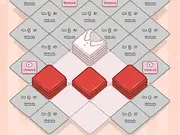
At its core, Tango: The Balance Grid is a masterclass in strategic grid-based puzzle-solving. The fundamental premise revolves around a central grid, often a pristine 7×7 or 9×9 layout, where players are tasked with placing various weighted “glyphs” or “nodes.” Each glyph carries a specific gravitational pull, represented by its color, shape, and inherent value. The genius of the game lies in its real-time balance mechanism: as you place these elements, the entire grid reacts, subtly (or not so subtly) tilting and shifting its center of gravity. Your ultimate objective? To prevent the grid from capsizing, keeping its delicate balance within a stable tolerance zone.
What truly sets Tango: The Balance Grid game apart is its dynamic feedback loop. The visual representation of the grid’s stability – perhaps a central orb glowing brighter in equilibrium, or a pair of elegant scales teetering on the edge – provides instant, visceral understanding of your actions. It’s not just about placing pieces; it’s about foreseeing the ripple effect of each placement, understanding how a small, seemingly innocuous glyph on one corner can drastically alter the entire grid’s equilibrium. The game has no grand narrative or elaborate backstory; its story unfolds with every strategic decision, every near-collapse, and every perfectly balanced solution you engineer.
The overall gaming experience with Tango: The Balance Grid online is one of focused meditation blended with exhilarating tension. It demands a particular kind of spatial reasoning and predictive thinking, akin to a chess player’s foresight but with the added layer of real-time physics. You’ll find yourself not just reacting, but actively planning several moves ahead, considering the impact of incoming glyphs and how to counteract previous imbalances. It’s a delightful mental workout that never feels like a chore, instead offering a deeply satisfying sense of accomplishment with each stable grid you construct.
Players stepping into this world for the first time can expect a gentle learning curve that quickly escalates into genuinely challenging scenarios. The initial levels serve as an excellent tutorial, gradually introducing different glyph types and environmental modifiers. You’ll learn the nuances of how various colors or patterns affect weight distribution, and soon, you’ll be instinctively seeking out symmetrical placements or deliberate counterweights to maintain harmony. It’s a beautifully crafted experience that truly shines as a unique entry in the puzzle genre.
How to Play Tango: The Balance Grid
Diving into the mechanics of Tango: The Balance Grid is an exercise in elegant simplicity, yet mastering its intricacies requires keen observation and strategic foresight. The core interface presents you with a primary grid, typically a 7×7 or 9×9 layout, and a queue of upcoming “glyphs” at the bottom of your screen. These glyphs are your building blocks, each possessing a distinct shape, color, and inherent “weight” value that influences the grid’s delicate equilibrium. Your mission is to place these glyphs onto the grid without letting it tip too far in any direction, a state visually represented by a central balance meter or a set of digital scales beneath the grid.
To begin playing, you’ll primarily use your mouse on PC or touch gestures on mobile. To place a glyph, simply left-click and hold the desired glyph from the incoming queue. While holding, drag it over an empty square on the main grid. A transparent overlay of the glyph will appear, indicating its proposed placement. Once you release the left mouse button (or lift your finger on touch devices), the glyph snaps into place. Observe the balance meter immediately; it will react to your placement, showing the grid’s new equilibrium state. If it veers into the red zones, the grid becomes unstable, and you risk a collapse.
Some more complex glyphs might have directional properties, meaning their weight distribution changes based on their orientation. For these, after placing them with a left-click and drag, you can fine-tune their effect. If you’re playing on PC, a quick right-click on a recently placed directional glyph will rotate it 90 degrees clockwise, potentially shifting its influence and helping you rebalance the grid. On touchscreens, a two-finger tap on such a glyph typically performs the same rotation. This rotation mechanic is absolutely crucial for advanced play, allowing for subtle adjustments without having to remove and replace glyphs.
Your main objective in each level is to place a specified number of glyphs or maintain stability for a set duration, all while keeping the balance indicator within the ‘green’ or ‘stable’ zone. Secondary objectives often involve achieving perfect symmetry, using a limited number of glyphs, or reaching a certain score threshold. Beginners should focus on even distribution initially, trying to place glyphs symmetrically around the grid’s center. Pay close attention to the visual cues: if the grid starts listing heavily to the right, your next glyph should ideally be placed on the left side, preferably with a higher weight value, to act as a counterweight. Don’t be afraid to experiment with rotational glyphs early on; they offer incredible flexibility in managing the grid’s delicate poise. Different game modes, such as “Puzzle Mode” or “Timed Challenge,” introduce variations on these core mechanics, but the foundational interaction remains: place, observe, adjust, and maintain balance.
What Makes Tango: The Balance Grid Special
The true genius of Tango: The Balance Grid doesn’t just lie in its clever premise, but in a meticulously designed suite of features that elevate it far beyond a typical puzzle game. It’s a testament to how innovative mechanics, coupled with a polished user experience, can create something truly compelling. From its dynamic challenge to its captivating aesthetic, every element feels purpose-built to draw players deeper into its world of equilibrium.
- Dynamic Grid Physics: The grid itself is a living, breathing entity, reacting in real-time to every glyph placement. This isn’t a static puzzle; it’s a constantly evolving challenge where foresight is paramount.
- Intuitive Glyph System: A diverse array of glyphs, each with unique weights, shapes, and sometimes rotational properties, provides immense strategic depth without overwhelming the player.
- Instant Visual Feedback: The balance indicator, whether a glowing orb or a set of scales, offers immediate, clear feedback, making it easy to understand the consequences of your actions.
- Adaptive Difficulty: The game intelligently scales its challenge, introducing new glyph types, larger grids, or environmental hazards as players progress, ensuring sustained engagement.
- Multiple Game Modes: From the relaxed Endless Tango to the cerebral Puzzle Mode and the adrenaline-fueled Timed Challenges, there’s a playstyle for every mood.
- Minimalist yet Engaging Aesthetics: The clean, uncluttered interface and soothing color palettes ensure focus on gameplay, while subtle animations add a layer of polish.
- Sound Design Excellence: Subtly ambient background music and satisfying sound effects for placing and balancing glyphs enhance the immersive experience without distraction.
- Global Leaderboards: A robust system for comparing scores and achievements with friends and players worldwide fosters a healthy sense of competition and community.
- Daily Challenges: Regularly updated, unique puzzles offer fresh content and incentives for players to return day after day.
- Replayability: The procedural generation in Endless mode and varied puzzle setups in Campaign mode ensure that no two play sessions are ever quite the same.
These features coalesce into a gaming experience that is simultaneously calming and intensely stimulating. The fluid mechanics and rich variety of challenges mean that Tango: The Balance Grid game never grows stale, consistently offering new layers of strategy and satisfaction. It’s truly a masterclass in elegant game design, benefiting players with endless fun and mental stimulation.
Mastering Tango: The Balance Grid
Transitioning from a casual player to a true maestro of Tango: The Balance Grid demands a deeper understanding of its subtle mechanics and a shift in strategic thinking. It’s not enough to simply react; true mastery comes from anticipating, planning, and executing with surgical precision. To truly dominate the leaderboards and conquer the most formidable challenges, a nuanced approach is essential, blending predictive logic with quick, decisive actions.
One of the most crucial advanced techniques involves what I call “predictive counter-balancing.” Instead of merely responding to an imbalance, savvy players learn to anticipate the effect of the next few incoming glyphs from the queue. If you see a particularly heavy glyph approaching, strategically create a slight imbalance on the opposite side *before* it arrives, so that its placement brings the grid back into perfect equilibrium rather than pushing it over the edge. This proactive approach drastically reduces reactive scrambling and maintains smoother stability. Always keep an eye on the next 2-3 glyphs.
Another powerful strategy is “rotational optimization.” Many players underutilize the rotational glyphs, often just placing them in a default orientation. However, a single right-click (or two-finger tap) can completely alter a glyph’s influence, allowing it to exert more weight on an adjacent square or distribute it differently. Experimenting with rotations, even on seemingly symmetrical glyphs, can unlock hidden potentials for fine-tuning the balance. In tight situations, a well-timed rotation can prevent a collapse, acting as a microscopic adjustment to save your run. Don’t underestimate the power of these subtle shifts.
Furthermore, consider “corner loading” and “central anchoring.” While it seems intuitive to spread weight evenly, sometimes strategically placing heavier glyphs towards the corners of the grid can create robust anchor points, making the central areas more forgiving for lighter placements. Conversely, using very light glyphs to “anchor” the dead center of the grid can create a neutral baseline from which to build outwards. Understanding the interplay between edge and center placements, and how their influence propagates, is key to higher scores. Achieving mastery in play Tango: The Balance Grid involves internalizing these sophisticated interactions, transforming simple placements into a symphony of strategic moves that culminates in a flawlessly balanced grid, even under extreme pressure.
Different Ways to Play
Beyond its captivating core mechanics, Tango: The Balance Grid extends its appeal through a thoughtfully curated selection of game modes, ensuring that the experience remains fresh and engaging for all types of players. This variety is a key component of its exceptional replay value, offering distinct challenges that cater to different strategic preferences and time commitments. Whether you’re seeking a leisurely puzzle or an intense high-score chase, there’s a mode perfectly tailored for you.
The flagship “Campaign” or “Journey” mode guides players through a series of progressively intricate levels, each introducing new grid sizes, unique glyph properties, and environmental modifiers that demand evolving strategies. Here, progression is tied to successfully completing these specific balancing acts, often unlocking cosmetic rewards or new background themes. For those who thrive on relentless challenge, the “Endless Tango” mode presents an ever-accelerating stream of glyphs on a dynamically volatile grid, pushing your skills to their absolute limits as you strive for the highest possible score against a global leaderboard. This mode truly highlights the addictive nature of Tango: The Balance Grid online, keeping players coming back to beat their personal bests.
Then there’s the “Puzzle Mode,” a true test of mental acuity. These pre-designed scenarios offer a finite set of glyphs and a very specific, often counter-intuitive, solution to achieve perfect balance. It’s a more methodical, less real-time experience, focusing on pure logic and spatial reasoning. Finally, the “Daily Challenge” provides a rotating, unique puzzle each day, often with special rules or a time limit, offering a fresh incentive to log in and compete for bragging rights. This array of modes ensures that whether you have two minutes or two hours, there’s always a compelling way to engage with the unique balancing act of this fantastic Popular game.
What Makes This Game Addictive
The enduring magnetism of Tango: The Balance Grid is deeply rooted in its psychological appeal, crafting an addictive loop that keeps players returning, session after session. It taps into a fundamental human desire for order and control, offering a tangible representation of equilibrium that is immensely satisfying to achieve. The continuous challenge of maintaining that delicate poise, even as the game throws ever more complex variables your way, creates an almost meditative flow state, where the outside world fades, and only the grid matters.
Players consistently praise the “just one more go” factor that defines the experience. The rapid feedback cycles and clear objectives mean that even when you fail, you immediately understand *why* you failed, fostering a potent desire to instantly retry and implement a revised strategy. It’s a game that respects your intelligence, never feeling unfair, only challenging. As one fictional player, ‘BalanceMaster77’, aptly put it in a community forum: “It’s like digital zen, until the grid starts to wobble, then it’s pure adrenaline! I can’t stop trying to get that perfect balance.” Another, ‘GlyphGuru’, commented: “The way the pieces interact, it’s so elegant. You feel like a genius when you pull off a tricky save.” This pervasive sense of achievable mastery and constant improvement ensures the fun factor remains perpetually high.
The simple yet profound satisfaction of seeing a chaotic grid snap back into perfect harmony under your strategic guidance is an incredibly powerful emotional trigger. It’s the thrill of mastering chaos, turning potential collapse into serene stability. This unique blend of cerebral challenge and immediate gratification is what makes Tango: The Balance Grid game not just a pastime, but a captivating and truly addictive intellectual pursuit.
Is Tango: The Balance Grid Right For You?
Pondering whether Tango: The Balance Grid will resonate with your gaming sensibilities? Let me paint a picture of the ideal player who will find themselves utterly captivated by this unique experience. If your gaming preferences lean towards titles that demand thoughtful consideration over lightning-fast reflexes, or if you appreciate elegant problem-solving distilled into a sleek package, then congratulations – you’ve likely found your next obsession. This game shines brightest for those who enjoy mental workouts that feel more like engaging puzzles than strenuous tasks.
It’s an absolute dream for fans of logic puzzles, spatial reasoning challenges, and strategy games where planning a few steps ahead is rewarded handsomely. If you’ve ever enjoyed the focused concentration of games like Tetris (but with a more strategic, less frantic pace) or the cerebral satisfaction of Sudoku, you’ll feel right at home with the nuanced balancing acts of Tango: The Balance Grid. The learning curve is remarkably gentle, making it highly accessible for newcomers to the genre, yet its depths provide endless challenge for seasoned puzzle veterans. There are no violent themes or complex narratives, making it suitable for a broad audience, typically recommended for ages 8 and up due to the strategic thinking involved.
Ultimately, if you’re seeking a game that offers quick, satisfying bursts of play perfect for lunch breaks, commutes, or winding down, but also provides the profound depth for longer, more focused sessions, then look no further. Its accessibility means anyone can play Tango: The Balance Grid and grasp the basics within minutes, but its layers of strategy ensure that true mastery is a journey, not a destination. Give it a try; you might just discover a new favorite. It’s a game that promises both relaxation and intellectual stimulation, an ideal blend for almost any gamer.
Why You Should Play Tango: The Balance Grid Today
In a gaming landscape often saturated with noise and fleeting trends, Tango: The Balance Grid stands out as a genuine hidden gem, an experience that transcends mere entertainment and offers something truly special. It’s a compelling argument for the power of elegant game design, proving that simplicity, when executed with precision and creativity, can lead to boundless depth and enduring enjoyment. This isn’t just another game to fill a few spare moments; it’s an opportunity to engage your mind, sharpen your strategic thinking, and discover a profoundly satisfying new challenge.
The sheer brilliance of its core mechanics – the real-time balance, the intuitive glyph system, and the ever-present tension of maintaining equilibrium – creates an unforgettable gameplay loop. It’s a game that perfectly encapsulates the phrase “easy to learn, difficult to master,” providing immediate gratification for beginners while constantly pushing the boundaries of what seasoned players can achieve. Every session with Tango: The Balance Grid game offers a unique blend of calm focus and exhilarating strategic decision-making, leaving you feeling mentally invigorated and accomplished.
So, why hesitate? This is your invitation to dive into a world where precision, foresight, and a touch of daring are your greatest assets. Whether you’re a puzzle enthusiast seeking your next great obsession, a casual gamer looking for a perfect quick-session escape, or simply someone curious about a truly innovative and popular game, play Tango: The Balance Grid today. Experience the unique thrill of taming the grid, mastering its intricate physics, and achieving that sublime, elusive state of perfect balance. Your next favorite game is just a click away!